Wednesday, 12 June 2013

Do you have swollen painful toe?

A swollen painful toe can be caused by a number of reasons. We outline and link to more detail of some of the more common ones.

5903154733 3d2155bf3c z Swollen Painful Toe
 

What causes a swollen painful toe?

There are many possible reasons for a swollen toe. It could be due to a traumatic injury, overuse injury or even an underlying medical condition.
The toes consist of three bones called the phalanges, with the exception of the big toe (or hallux) which contains only 2. These bones are held together by ligaments. Tendons also pass through the toes and connect to these bones to allow movement when the muscles within the foot and lower leg contract. You will also find nerves and blood vessels in the toes.

Traumatic injuries

If you have dropped something on your toe or been involved in a traumatic incident such as a tackle or a car accident, then a swollen toe could indicate:
  • A broken toe

  • Bruising of the bone or surrounding soft tissue

  • A ligament injury if the toe was bent backwards or twisted e.g. turf toe

  • Overuse injuries- an overuse injury is one that comes on gradually, rather than following a specific incident. Pain usually gradually increases.

  • Metatarsalgia

  • Tendonitis – inflammation of one of the tendons in the toe.

  • Bursitis – often secondary to a hammer toe and located on the top of the second toe.


 Certain medical conditions may result in swelling in the feet and toes:

  • Gout - other symptoms will include redness, heat and pain.

  • Arthritis.

  • Infection.

  • Venous thrombosis (blood clot).

  • Allergic reaction (to anything from medications, to food, to insect bites.


Treatment of a swollen painful toe

Treatment will depend on the cause of the swelling. Visit your Doctor or a sports injury specialist for an assessment. If you suspect it may be any of the medical conditions listed, visit your Doctor as soon as possible.
If the swelling is as a result of a traumatic injury, swelling can be reduced by resting, applying cold therapy and elevating the foot.

For more on a swollen painful toe visit this link.

Tuesday, 11 June 2013

Do you have itchy rash on the arch or heel of the foot?

An itchy rash on the arch or heel of the foot is an extremely common problem to have. Since the arch of your foot is very thin, it is a prime target for feeling the effects of the itching and irritation. The most common causes are eczema, dehydration of the skin, dermatitis due to irritation by a material (sock or shoe) and athlete’s foot (Tinea Pedis). These are usually very easily treated since the offending agent can be removed or corrected and the fungus easily treated compared to the more difficult nail fungus.

Itchy Foot Arch Rash Itchy Rash on the Arch or Heel of the Foot
Itchy Rash on the Arch or Heel of the Foot

Symptoms of an itchy foot arch rash:

  • Red or violet skin color.
  • Inflamed skin.
  • Blisters if very severe (Assume acute fungal infection or athlete’s foot).
  • Flaky dry skin (assume chronic fungal infection).
  • Peeling skin.
  • Bleeding and scarring from scratching.

Prevention of itchy rash on the arch or heel:

The majority of causes of itchy foot arch rashes consist of irritations that should be removed by trying to remove different materials that may be irritating your feet such as the socks, shoes or detergents. The second major cause is due to dehydration which can be prevented by wearing thinner socks, moisturizing your feet after taking a bath or shower;  The third common cause is hygiene- simply washing and moisturizing may take care of it; the fourth major cause if fungal infection which will need an athlete’s foot medication to take care of the problem.
  • Allergies to a material.
  • Dehydration (low humidity and wet feet that need to be moisturized).
  • Overly sweaty feet due to bacteria (pomphylox which may need medication and moisturizing).
  • Overly sweaty feet due to heat (need better socks).
  • Insect, tick or flea bites.
  • Sock material irritation.
  • Shoe material irritation.
  • Soap, laundry detergent or perfume irritation.
  • Pregnant women hormones.
  • Poor foot hygiene.
  • Lack of moisturizing after bathing or showering.

Home treatment of an itchy foot arch and heel rash

First you should identify what the cause of your athlete’s foot is which may be an involved process, but try the above preventions first.

Stage 1: Remove the cause of the problem

  • Wash feet your feet with soap regularly.
  • Moisturize with any moisturizing cream after your feet get wet (this prevents dehydration) every time for 2 weeks!
  • Change the material of your socks or any other material that may be irritating your feet (perfume etc)

Stage 2: Try an over the counter cortisone cream or antihistamine medication

  • Consult with your doctor and pharmacist, but 2/3rds of itchy rashes will be taken care of with a week or so of over the counter cortisone cream.
  • If this works you likely had eczema or dermatitis.
  • If the rash does not get better move on to step 3.

Stage 3: Assume Fungus

  • If the rash got worse with the cortisone cream or antihistamines, it is likely athlete’s foot or a fungus.
  • At this point you should go see your podiatrist for some foot medication.
  • 2 weeks of medication will take care of almost any athletes foot with 100% certainty.

For more on itchy rash on the arch or heel visit this link.

Sunday, 9 June 2013

Do you have dry cracked feet?

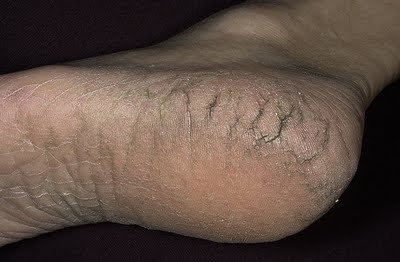
Dry Cracked Feet – Stop getting annoyed by itchiness, flaking and irritated skin. Find out what’s causing it and start treating it!
 Dry Cracked Feet

Why do you get dry cracked feet?

Usually if the the skin is severely dry an cracked as seen in the picture, something is causing it. The skin on the bottom of our soles is special because it is thicker than the rest of the skin in our body. It also relies more on sweat glands rather than oil glands to keep moist, so it is more important to keep it moisturized.
  • It is important to keep the bottom of the feet moisturized, it is the ultimate cure for any cause!
This thick skin is more susceptible to dehydration to to lack of moisturizing; it is also more prone to inflammatory reactions and fungal irritation.

Dry cracked feet symptoms:

If the dry, cracked feet are very severe, then something else can be causing it. The symptoms will range from the following:
  • Itchy skin.
  • Red skin.
  • Cracks in the skin.
  • Bleeding may be associated with the cracks.
  • Peeling at the bottom of the foot and heel.
  • Flakes and flaking.
  • Rough, uneven skin.
  • Development of a rash.
  • Worse after showering or bathing.

 Dry Cracked Feet

Dry cracked feet causes:

  • Showering or bathing.
  • Inflammatory skin conditions: exczema, psoriasis and many more.
  • Contact dermatitis (irritation by a harsh substance- such us a lower quality soap, or chlorine).
  • Cold weather (causing dehydration).
  • Low humidity in your home (causing dehydration).
  • Older Age (less blood supply)
  • Peripheral vascular disease.
  • Smoking.
  • Diabetes.

dryskin Dry Cracked Feet

Dry cracked feet causes:

Essentially it breaks down like this:
1) Assume initially it is dryness, dehydration or an inflammatory condition.
  • 2/3rds are caused by inflammatory causes: eczema, skin conditions, irritation, dehydration, sweating disorders.
  • **Inflammatory Conditions are all treated the same way, but different than fungal conditions**.
  • For best results always go see your podiatrist or dermatologist!

Follow the link to see part 1 of treatment guide!


2) If part 1 does not cause your foot to get better after a week, it may be a fungal infection.
  • 1/3rd are caused by Fungal Irritation.
  • **Fungal conditions are all essentially treated the same way, but different than inflammatory conditions**.
  • For best results always go see your podiatrist or dermatologist!

The way I would treat this if it was myself:

1) Assume inflammatory causes and start treating it that way.
2) If it doesn’t start getting better after a week or so, it is most likely fungal irritation.
3) Go see your podiatrist since something more complicated may be going on.


To check more information about dry cracked feet visit this link!

Friday, 7 June 2013

ToeOsteochondroma 244x300 Osteochondroma in the Toe or Foot
Toe Osteochondroma

Do you have osteochondroma deformity in the toe or foot?

An osteochondroma is a noncancerous tumor that develops on the surface of a bone near a growth plate. The reason it develops near a growth plate is because cartilage is developing there and an osteochondroma is made of both bone and cartilage. The osteochondroma usually appears in childhood and adolescence and starts growing as the growth plate grows but then stops growing when the growth plate stops growing. The toe and foot osteochondroma deformity is usually something that should be monitored by not really worried about in most cases.

Cause of the toe osteochondroma deformity

-Osteochondromas in the foot and toe are thought to be the most common benign (non-cancerous) bone tumors by a mile, making up about 1/3rd of all benign bone tumors in the foot. Like most tumors it is not exactly known why these things happen, anything could have caused it and it could even be genetic or through a random environmental agent.
-If you start to get multiple osteochondromas in multiple regions in the body you may need to start worrying about Maffuci’s Syndrome or other multiple osteochromatosis disorders, but otherwise you should be safe.
-It is difficult to prevent these because it is very difficult to predict who will get it and why they will get it.

Symptoms of toe and foot osteochondromas

In most people they will cause no problems and will not be noticed unless you are getting an X-ray for a different reason and the podiatrist happens to notice them.
-Painless bump that may be confused with a cyst
-Lifting of the toenail is the osteochondroma exostosis is underneath the nail
-Pain on pressure because the skin and nerves are being compressed
-Numbness or tingling because of nerve compression
-Impinged blood vessel if it is very severe

Home treatment

-The best option is to go see a podiatrist where he will give you surgical options or decide to just monitory it, but most of the time you will be ok just monitoring it
-The podiatrist will use X-ray, MRI or ultrasound to come to this decision as well as the normal physical and historical exam.

Foot and toe osteochondroma surgery recovery time

-Surgical is usually advocated if the podiatrist believes that the osteochondroma is:
  • Causing Pain
  • Putting a Nerve or Blood vessel at risk
  • It has unusual characteristics on imaging
-If removed the osteochondroma will be checked with biopsy to see if there is anything to worry about, but usually there is not.
-The toe and foot osteochondroma surgery recovery time depends on how big it is and where the location is, but usually you should be on your feet in a couple of days or even immediately in a surgical with the main worry being to just get the wound closed.

 For more information about toe and foot osteochondromas see this link.
Lipoma Images Soft Lump on Foot or Ankle

Do you have a soft lump on foot or ankle?

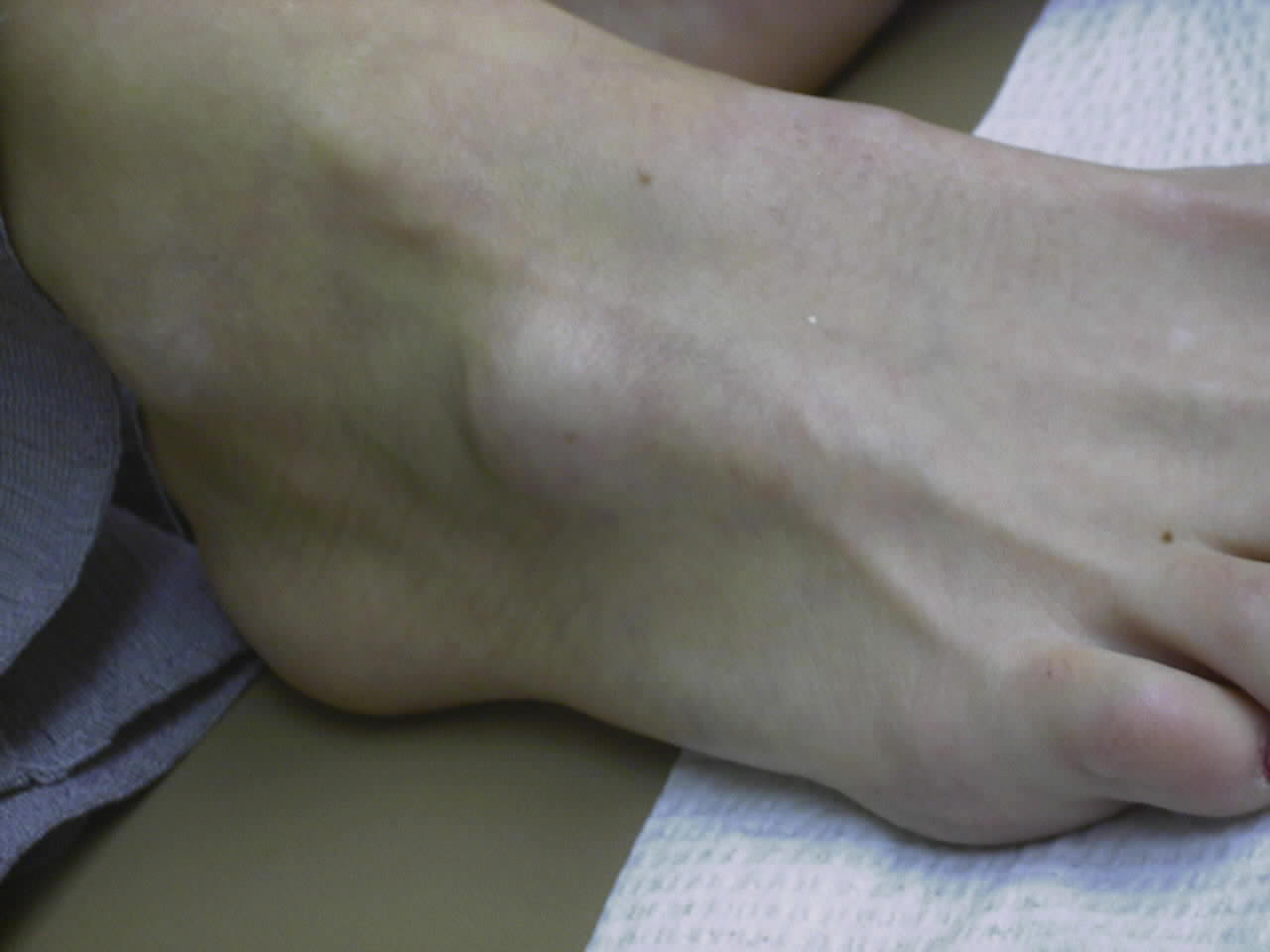
A soft lump on foot or ankle is almost always a “Plantar Lipoma”, this is simply the formation of a slow growing fatty tissue. Its actually quite common on the bottom of the foot and its nothing that you should be overly worried about. A lipoma is the most common formation of extra tissue or  tumor growth(but its not dangerous); it is non-cancerous and its nothing to worry about.

What should I do?

  • Usually nothing needs to be done.
  • This is the most common soft tissue mass in the population
  • These are technically tumors but very common.
  • They are non-cancerous.
  • An evaluation by your podiatrist or foot doctor should be done if you are concerned.
  • If they are uncomfortable they can be removed.
  • Unfortunately surgery is sometimes considered cosmetic unless there is pain.

Is it dangerous if painful?

It is almost never dangerous, and if it is not causing pain then it doesn’t even require treatment. The only time is is even something to worry about is when it is in an unusually spot and compressing against a nerve or artery, then it may have to be removed. It can also be removed if it is in a pressure bearing area that makes it uncomfortable to walk, but otherwise there is nothing to worry about.

Can it be removed if there is pain?

Unless your podiatrist or foot doctor determines that it is causing you pain or it is dangerous, these are usually considered cosmetic surgeries and some insurance companies will not pay the money to have this tumor removed.

Treatment of soft lumps in the foot or ankle

The only real treatment is to have surgery to have the lipoma removed, there is no medication you can take or change in lifestyle that will make this extra fat tissue go away.

For more information about soft lumps in the foot or ankle see this link.

Wednesday, 29 May 2013

GanglionicCyst Ganglionic Cyst

Do you have ganglionic cyst?

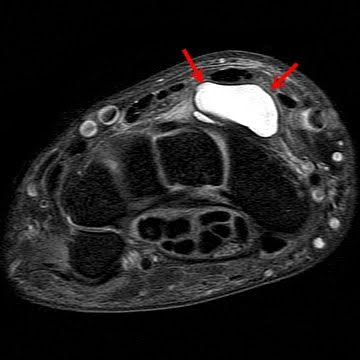
Ganglion cysts are swellings of fluid on top of foot joints such as the big toe joint, the top of the foot and the ankle. A cyst by definition is a sac filled with fluid and it can feel hard or soft. Ganglionic cysts of the foot, wrists or hands are usually not dangerous and they usually occur between the ages of 20-40 years of age.

Most common locations of a ganglion cyst

  • Where the fingers and the hand meet.
  • The tips of the fingernails and toenails- this is called a mucous cutaneous cyst ( Mucous Cyst)
  • The outside of the knee
  • The outside of the ankle
  • The top of the foot
  • The big toe joint

Cause of ganglionic cysts

Ganglionic cysts can be though of as a protrusion of fluid from a joint that is still surrounded by a sac of membranous tissue. Think of this like squeezing a water balloon with your hands in all areas except a small pocket, that area of the balloon with pouch outward- this is what is happening with your joint. A thin canal of fluid forms and pouches outside the joint.

Ganglionic cyst symptoms

  • If feels like a bump that can be soft or hard.
  • It should not move as you push on it
  • The size may increase or decrease depending on if you elevate or lower your hands and feet over time (but this is not always consistent)
  • Most of ganglionic cysts can cause pain, especially the ones around your toenail.
  • Pain can be the worse around the joint

Home treatment of a ganglionic cyst

See a Podiatrist even if it doesn’t hurt. Even though a ganglionic cyst is usually harmless except for the pain, there is always a chance that this could be a cancerous tumor such as a synovial sarcoma(very low odds).
  • The ganglionic cyst has the nickname “Bible Cyst” because hitting the cyst really hard with a bible made it go back temporarily, but this ganglion cyst will almost always eventually come back. The only true cure is to have your podiatrist perform a ganglion cyst removal surgery.

 Podiatrist treatment of a ganglion cyst

  • X-ray is essential to rule out other types of tumors- Don’t mess around with this one, make sure its actually a ganglionic cyst.
  • Ultrasound will confirm that the mass is fluid filled.
  • MRI can also be ordered if there is difficulty confirming the mass with an ultrasound, although this is rarely necessary.
  • A podiatrist can perform aspiration of the ganglion cyst in the foot.
ax+t2 Ganglionic Cyst

What to expect after the aspiration of a ganglion cyst in the foot?

After the aspiration of the ganglion cyst, you will likely be free of the ganglionic cyst for some time; but eventually it is almost guaranteed to come back. The only true cure for a ganglion cyst in the foot is aspiration.

Ganglionic cyst removal surgery by a podiatrist

  • The only way to keep a large ganglionic cyst from removal is excision- The healing time is usually very good as the incision is usually not from the bottom of the foot and you can start walking immediately after the ganglion cyst removal surgery
  • You will likely need to wear a bandage for at least 7-10 days and maybe a surgical shoe to prevent irritation of the wound.

Ganglionic foot cyst removal surgery recovery time

The recovery time depends on a variety of factors, but if it is on the top of the foot(which it almost is), you can start walking almost immediately and take the sutures out in about 2 weeks.

To learn more about ganglionic foot cyst and treatment options see this link.

Tuesday, 28 May 2013

arth7 psoriasis Psoriasis Under The Toenails
Psoriasis under the toenails and fingernails

Do you have psoriasis under the toenails?

Psoriasis under the toenails can result in severe thickening, discoloration and pitting of the toenails. Learn how to make your toenails better!

Causes of psoriasis under the toenails:

The cause of toenail psoriasis is unknown. What we do know is that a good percentage of people suffering from psoriasis also develop nail problems as well. The reports vary with some saying only about 10-15% suffer from them, but other studies claim much higher numbers. The average seems to be around the 25% range.
You are more likely to have psoriasis under your toenails if:

Symptoms of psoriasis under the toenails:

Toenail psoriasis displays the following symptoms:
  • A discoloration beneath the nail. It is described as an “oil spot”.
  • The nail is much more thick.
  • The nail is extremely rough.
  • The nail displays characteristic pitting.
  • The distal part of the nail appears abnormal.
  • Beau’s lines – these are horizontal ridges.
  • Callus formation under the nail.
  • Loosening of the nail.

Diagnosis of psoriasis under the toenails:

The toenails are graded by a system known as the Nail Psoriasis Severity Index (NAPSI). It is a numberical and reproducible system for monitoring the toenail psoriasis. The system is based on assigning numerical values for some of the symptoms listed above.

Home treatment for psoriasis under the toenails:

Some quick tips for home care:
  • Keep your nails short and smooth. They are susceptible to bacterial and fungal infections which could make them look much worse.
  • Wear gloves to protect your nails while you are performing activities to keep your nails protected.
  • Wear properly fitted shoes to avoid excess pressure on your nails. Even light irritation and inflammation can make things worse.
  • Make sure to dry your nails properly after bathing.
  • Nail psoriasis is hard to treat, as nails grow very slowly. Be careful with them! They only grow 1mm per month.
  • You can try topical steroid cream temporarily to improve nail appearance.
  • Taking Vitamin D Vitamins may help.
  • Moisturizing ointments at night before bed work well.
  • Soak nails in vegetable oil while watching TV. You can then use an emery board or nail file to take the nails down a little bit.
  • Synthetic nail hardeners can make the nails look much better. These are glossy covers, no one will know the difference!
  • Acrylic nails are dangerous because you are more susceptible for nail fungus already with your psoriasis- I don’t recommend these.
  • Salicylic ointment can work great for your psoriatic nails. Follow directions of your prescriptions.
  • A mutlivitamin- while not completely proven through medical trials, has been recommended by many specialists.

Podiatrist treatment

There are many advances that are occuring in this field, so get excited! The outlook for psoriasis, while still dim is looking better and better every year.
Treatments focus on managing symptoms with a rheumatologist. Individualized plans can included topical and intralesional creams and injections. You can combine these with systemic and combination oral medication therapies.

To learn more, visit this link to learn more about causes and treatments for psoriasis under the toenails.